
What Is a Firearm? A Complete South African Beginner’s Guide
Disclaimer: The information on this website is provided for educational and informational purposes only. While we aim to present accurate and up-to-date guidance, all current and prospective firearm owners are responsible for conducting their own research and confirming legal requirements with official sources.
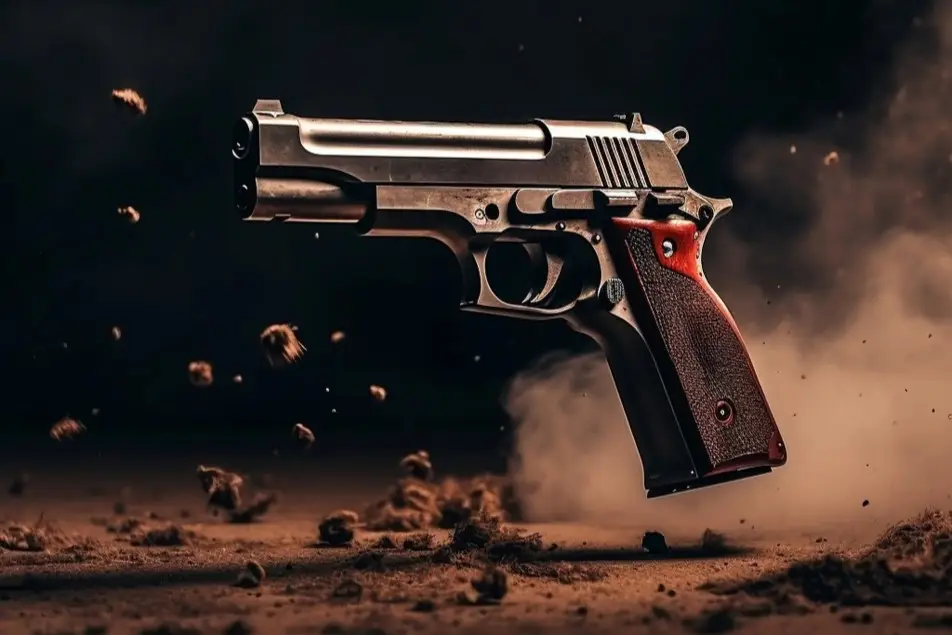
Understanding what is a firearm is the first and most important step for any South African considering ownership. Whether you’re applying for your first licence or strengthening your knowledge as an experienced owner, this foundational understanding shapes your competency, your motivation, and your long-term compliance with the Firearms Control Act (FCA).
In a country where firearm ownership is both a right and a regulated privilege, knowing the legal meaning of a firearm — as well as what devices are not considered firearms — protects you from accidental non-compliance and gives you the confidence to navigate the licensing system effectively.
This extended guide explores the legal definition, firearm components, classifications, safety responsibilities, and the critical role this knowledge plays throughout your licensing journey.
Table of Contents
Legal Definition of a Firearm in South Africa
To understand what is a firearm, we begin with the legal meaning. Firearms in South Africa are governed by the Firearms Control Act 60 of 2000, which defines exactly what qualifies as a firearm, what components are regulated, and under what circumstances a device falls within the law. According to the Act, a firearm is defined as:
“It is a device manufactured or designed to propel a projectile (bullet) through a barrel or cylinder by means of exothermic combustion (burning propellant).
A firearm is a “gun” (a barreled ranged weapon) designed to be readily carried and used by a single individual. It inflicts damage on targets by launching one or more projectiles driven by rapidly expanding high-pressure gas produced by exothermic combustion (deflagration) of chemical propellant. If gas pressurization is achieved through mechanical gas compression rather than through chemical propellant combustion, then the gun is technically an air gun, not a firearm. Some legal definitions of “firearm” are more broad, and may cover any and all projectile devices, or even other destructive devices.
Section 1 of the Firearms Control Act 60 of 2000 defines a firearm as:
(a) any device manufactured or designed to propel a bullet or projectile through a barrel or cylinder by means of burning propellant, at a muzzle energy exceeding 8 joules;
(b) device manufactured or designed to discharge rim-fire, centre-fire or pin-fire ammunition;
(c) device which is not at the time capable of discharging any bullet or projectile, but which is not at the time capable within the meaning of paragraphs (a) or (b);
(d) device manufactured to discharge a bullet or any other projectile of .22 caliber or higher at a muzzle energy of more than 8 joules by means of compressed gas and not by means of burning propellant;
(e) barrel, frames or a receiver of a device referred to in paragraph (a), (b), (c) or (d).”
This is the legal definition of a firearm.
This includes complete firearms as well as certain individual components. Under South African law, the following are legally considered “firearms” or regulated items even when separated:
Frames or receivers
Barrels
Slides (for semi-automatic pistols)
Cylinder assemblies (revolvers)
Bolt assemblies (rifles)
Any pressure-bearing components essential for function
This legal definition is critical because it determines what items require a licence, what items require safe storage, and what items require transport authorisation.
External reference:
Understanding the Definition: Breaking It Down
This section helps beginners interpret the Act in practical terms.
“Propel a projectile”
The device must be able to launch a bullet or projectile — even if only designed to, not currently capable.
“Burning propellant / exothermic combustion”
Firearms use chemical reactions to generate gas pressure. Airguns do not — unless they exceed the energy limits in paragraph (d).
“Muzzle energy exceeding 8 joules”
Anything exceeding this threshold may be considered a firearm — even if powered by compressed gas.
“Frames, receivers, barrels = firearms”
Even if stripped or incomplete, these parts are regulated.
This is why owners must store frames, bolts, barrels, and complete firearms in an SABS-approved safe.
Why the Definition Matters for Owners & Applicants
Understanding what is a firearm is essential for several reasons:
Correct licence selection
Applicants must apply for the correct licence category (e.g., Section 13, 15, or 16) depending on the intended use.
Compliance during transport and storage
Regulated components must be securely stored even when separated from the main device.
Avoiding accidental non-compliance
Possession of an unlicensed regulated component can be an offence.
Writing accurate motivations
SAPS often checks whether applicants understand the basic terminology and purpose of their chosen firearm.
Strengthening your competency training
Firearm proficiency training assumes a basic understanding of what a complete firearm is.
Key Firearm Components Explained
To understand what is a firearm, owners must understand its primary parts. Below are simplified descriptions suitable for beginners:
Barrel
The metal tube that guides the projectile when fired.
Chamber
Holds the cartridge ready for firing.
Frame or Receiver
The core structural component that houses internal mechanisms. Legally regarded as “the firearm” in most jurisdictions, including South Africa.
Bolt / Slide
Moves ammunition into position and extracts spent casings.
Action / Operating System
The mechanical system that loads, fires, and ejects cartridges.
Magazine
Stores ammunition and feeds it into the chamber.
Trigger Group
Controls firing; includes sear, hammer, and trigger. Initiates the firing sequence.
Safety Mechanisms
Built-in system designed to reduce the risk of accidental discharge.
See our upcoming section on “Introduction to Firearm Safety: Essential Tips for Beginners” for more details.
Firearm Mechanisms Explained (Beginner Friendly)
Manual Action (Bolt, Pump, Lever)
You operate the mechanism manually between shots.
Self-Loading / Semi-Automatic
Each shot cycles automatically; a trigger pull is required for every discharge.
Revolvers
Use a rotating cylinder to align cartridges.
Understanding these mechanisms helps you choose the correct firearm for sport shooting, hunting, or everyday carry (EDC).
What Is Not Classified as a Firearm
For clarity, the following items are generally NOT considered firearms in South Africa:
- Paintball markers
- Airsoft devices
- CO₂ guns under 8 joules
- Deactivated replicas
- Decorative antique models
- Film props
However, owners must still use good judgment. If an item is capable of launching a projectile with pressure, it may require classification. This is the value of the South African firearm ownership guide.
Firearm Types Commonly Owned in South Africa
South African owners most commonly apply for licences for the following types of firearms:
Pistols
Compact, suitable for everyday carry categories.
Revolvers
Simple, reliable, mechanically robust.
Bolt-Action Rifles
Popular among hunters and farmers.
Semi-Automatic Shotguns
Used in sport shooting categories (depending on licence type).
Semi-Automatic Rifles
Used for competitive shooting disciplines.
Each of these types is regulated under different licence categories, which are covered fully in Section 3: Licence Categories.
Firearm Classification & Licence Categories
A firearm’s classification affects its licence category. Here is a South African firearm ownership guide:
Section 13 – Self-Defence
Section 15 – Occasional Sport Shooting or Hunting
Section 16 – Dedicated Sport Shooting or Hunting
Section 21 – Temporary Permits
Each category requires different motivation documents, training, and evidence of intent.
Read Section 3: Licence Categories for a detailed breakdown of licence types.
Safety Responsibilities for New Owners
Understanding what is a firearm also means understanding the responsibilities that come with ownership:
Safe storage
SABS-approved gun safe, bolted securely as per legal requirements.
Competency training
Mandatory through a PFTC-accredited training provider.
Knowledge of the Firearms Control Act
A foundational requirement for competency certification.
Regular practice and familiarisation
Reduces risk and improves responsible usage.
External reference:
https://www.pftc.co.za (Professional Firearm Training Council)
Frequently Asked Questions
Q: Is a stripped frame still a firearm?
Yes. The frame/receiver is the firearm under South African law.
Q: If a gun is broken, is it still a firearm?
Yes — if it falls under (a), (b), (c), or (d), it is still regulated.
Q: Are air rifles firearms?
Only if:
They are .22 calibre or higher and
They exceed 8 joules
Q: Are blanks or blank-firing guns firearms?
Some are regulated; classification depends on design and capability.
External & Internal Resources
External
SA Government — Firearms Control Act (Click HERE)
Professional Firearm Training Council (PFTC) (Click HERE)
SAPS Firearms Services (Click HERE)
Internal
Section 3 — Licence Categories
Section 5 — Full Licensing Process
Section 7 — Application Checklists
Conclusion
Understanding what is a firearm according to South African law empowers applicants to comply confidently and responsibly.
The legal excerpt from the FCA remains the definitive source that governs ownership, licensing, and safe handling.
This knowledge forms the foundation for every other section in this educational series.
Next Section: Firearm History
To truly understand modern firearm ownership, we must look back.
The evolution of firearms — from early black-powder ignition systems to today’s precision-engineered platforms — shapes how we train, carry, store, and license firearms today.
🔥 NEXT: Discover how firearms evolved, how technology changed ownership, and how history shaped South Africa’s licensing system.
👉 Continue Reading: Section 2 – Firearm History